


Spencer Shops 1896 – 2026
Following the economic downturn known as the Panic of 1893, financier J.P. Morgan consolidated several struggling railroads to create Southern Railway in 1894. To lead the new railway system, Morgan selected his close friend and trusted associate Samuel Spencer, who later became known as the “Father of the Southern Railway System.” Under Spencer’s leadership, plans were developed for a major repair facility to replace the North Carolina Railroad’s Company Shops. Seeking a location roughly halfway between Washington and Atlanta, Southern Railway chose approximately 300 acres of farmland between Salisbury and the Yadkin River. The land, originally owned by Robert Partee, was sold to John S. Henderson and later acquired by Southern Railway. Construction of what became Spencer Shops began in 1895, and the first shop buildings including the boiler, woodworking, and blacksmith shops opened in August 1896. As the facility expanded into one of the South’s largest steam locomotive repair operations, the Spencer community grew alongside it and was officially incorporated in 1905 to support the more than 3,000 workers employed during the shops’ peak years.
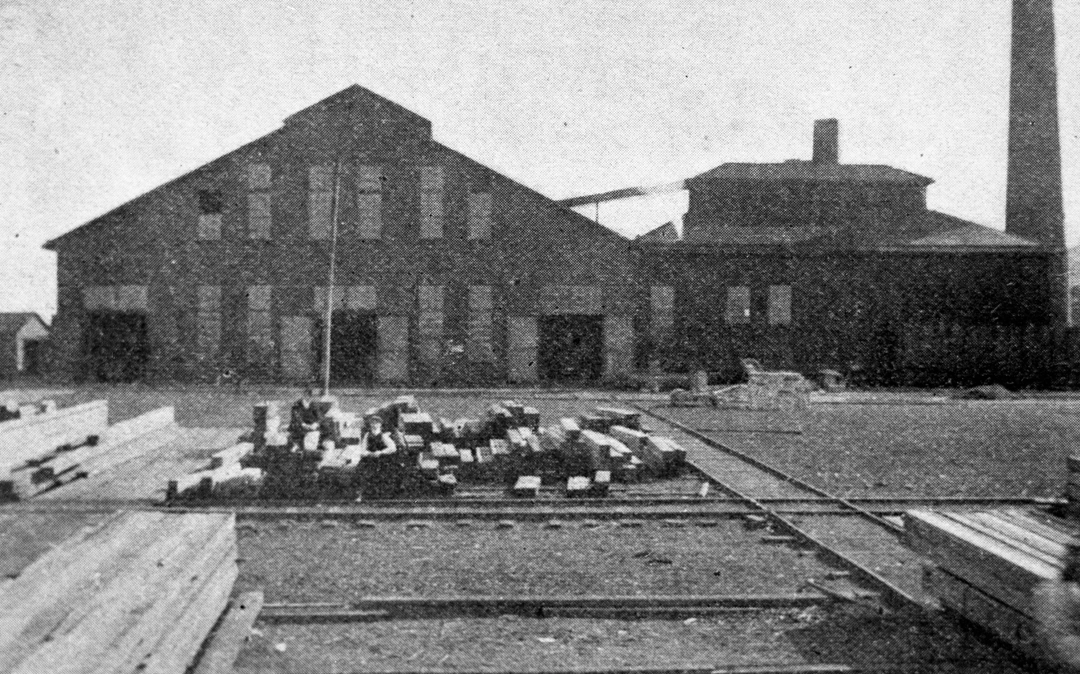
One of the earliest photographs of construction at Spencer Shops shows the woodworking shop on the left and the powerhouse on the right. The woodworking shop provided cut lumber for repair of early wooden passenger and freight cars. The powerhouse originally supplied electricity to the shops and the Town of Spencer. (North Carolina State Archives)
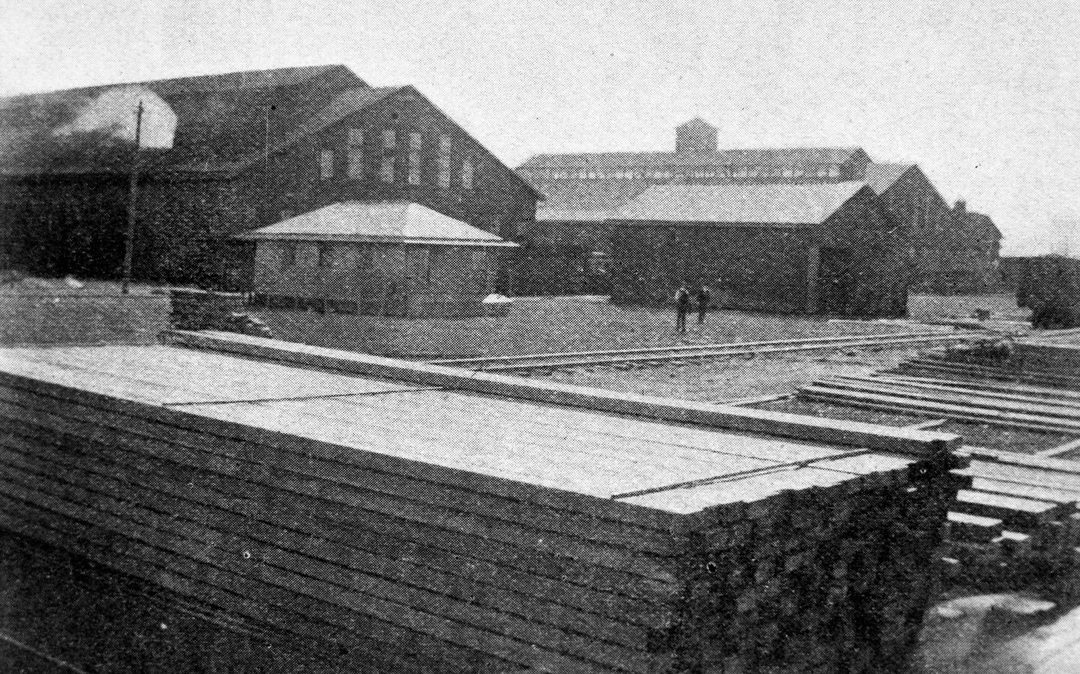
This view, also from 1896, shows two twin buildings – machine shop on the left and woodworking shop on the right. The machine shop had a transfer table to easily move locomotive wheelsets to one of the 10 tracks into the building. Before the back shop was completed, locomotives were serviced inside the building as well. (North Carolina State Archives)
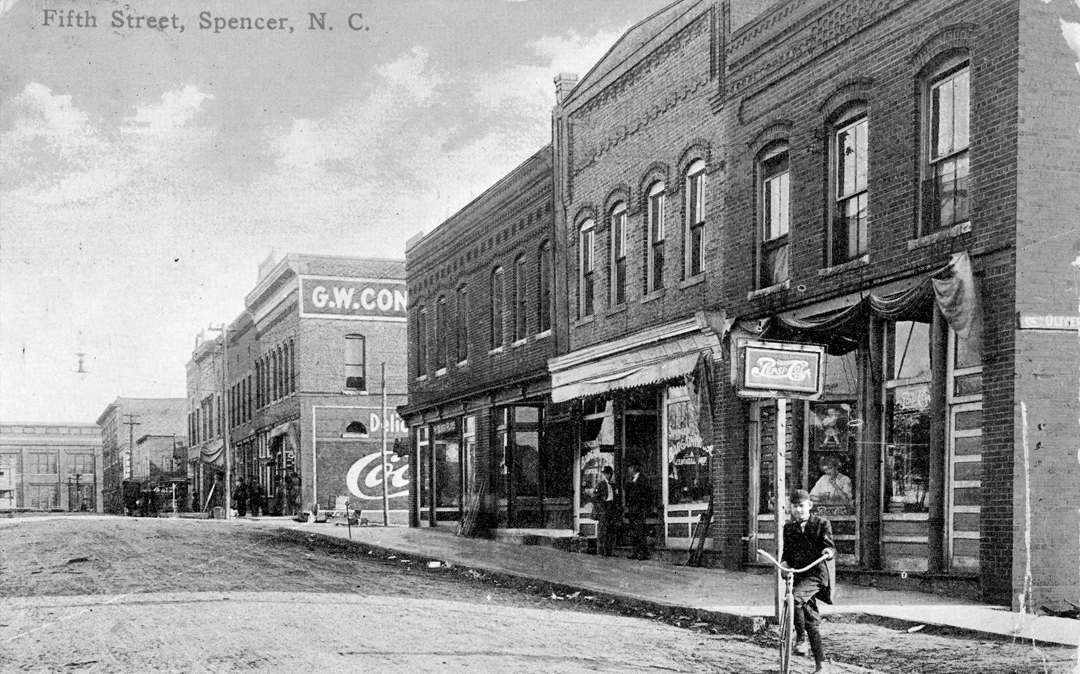
The Spencer Business District was centered around Fourth and Fifth streets, with many buildings constructed before 1910. Southern Railway did not operate the businesses but did forbid the sale of liquor in town limits through covenants. Pepsi-Cola had a bottling plant in Spencer through the 1920s, which was replaced by Boone Rock Bottling Company. (Rowan Museum collection)
Two major buildings – the Back Shop and Roundhouse – were soon constructed between 1900 and 1915. The Back Shop, completed in 1905, was 600 feet long and able to work on 15 steam locomotives at once over the longitudinal tracks. These locomotives were completely rebuilt, down to the boiler and frames within a 2-to-3-week timeframe. This was one of the largest buildings not only in Rowan County but North Carolina when completed. The first roundhouse, comprised of 15 stalls, was completed in 1915. A 90-foot turntable was constructed near the roundhouse as longer locomotives began operating through Spencer. Other buildings constructed during the early 1900s included the 600-foot car repair shed, icehouse and livestock pens to feed and water animals being transported by rail.
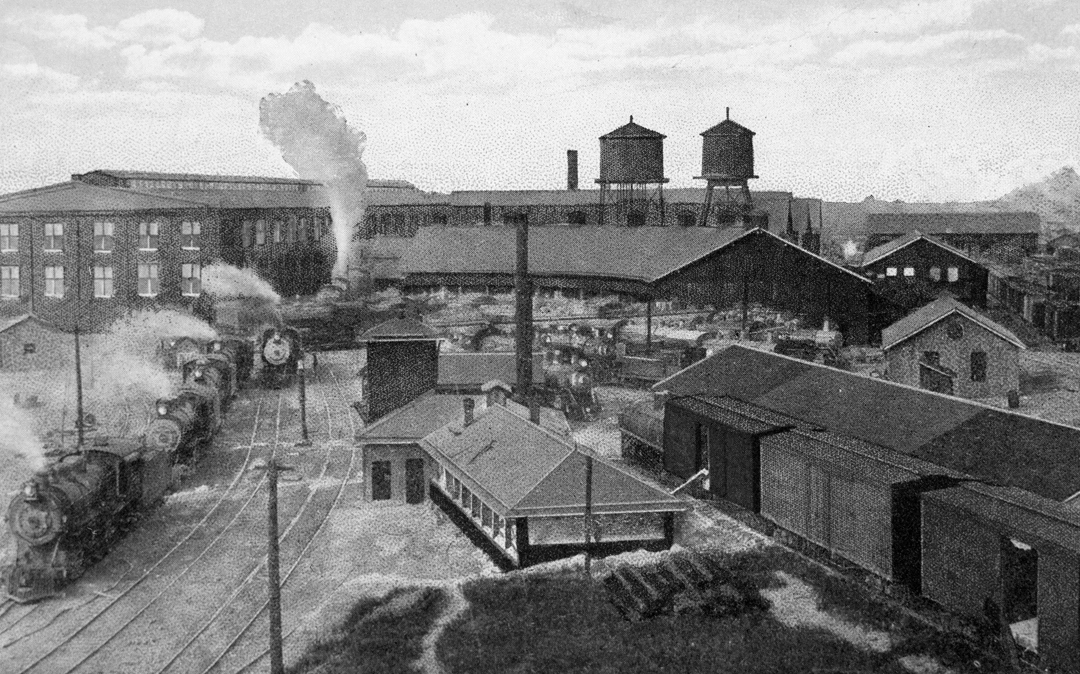
Construction continued in 1896 with the completion of a 15-stall roundhouse, shown sometime in the 1910s. John P. Pettyjohn and the W.W. Dorning companies of Lynchburg, Virginia handled construction for most original shop buildings. This roundhouse used a 65-foot turntable, but by 1912 an additional 90-foot turntable was constructed to rotate larger locomotives. (North Carolina State Archives)
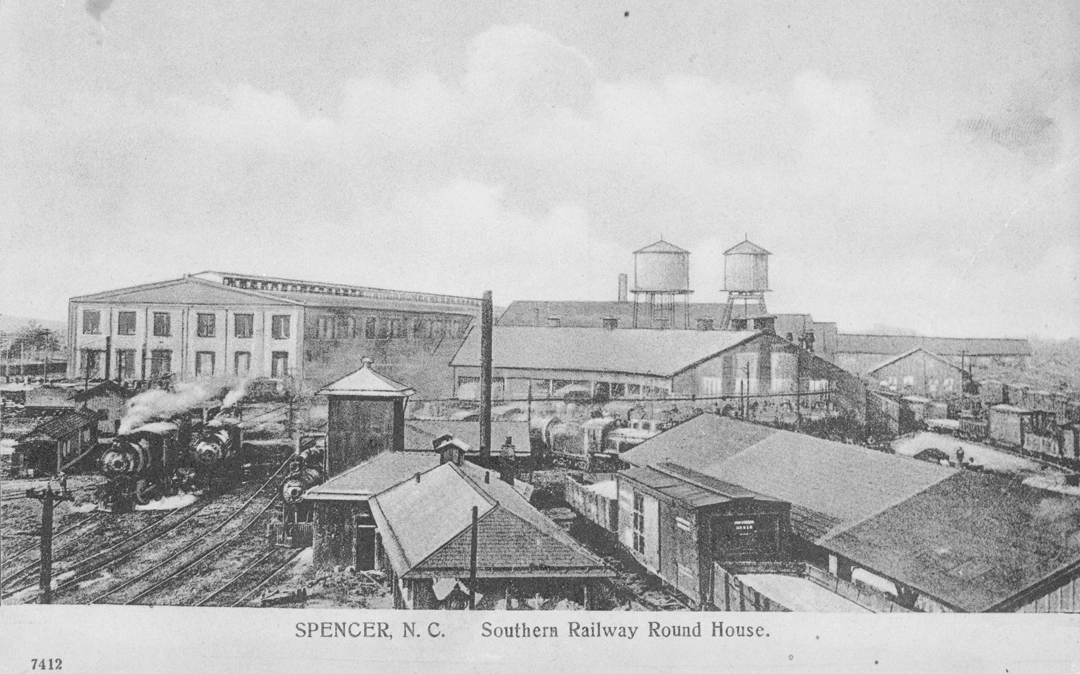
Another view of the 1896 roundhouse was taken after 1905. The locomotives on the left could be waiting on service in the roundhouse or awaiting a call for the next train. Note the sand in the cars to the right. Sand was used to help locomotives gain traction when the rails were wet or when pulling a long train. (Rowan Museum collection)
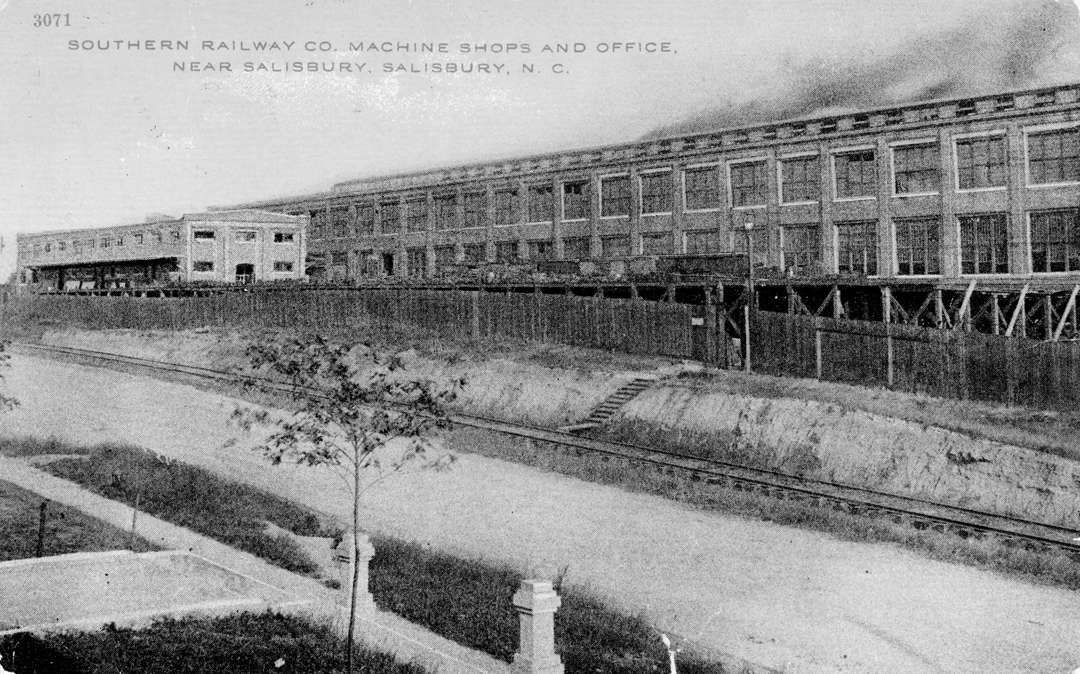
The master mechanic’s office, shown at left and completed in 1911, housed the office of the master mechanic, clerks and a two-story parts storehouse. This view shows how Spencer Shops appeared in the early days – dirt roads, trolley tracks, and impressive shop buildings. (Rowan Museum collection)
The main function of Spencer Shops was maintenance of steam locomotives and freight or passenger cars, not only on the main line, but smaller branch lines operated by the Southern in North Carolina. All steam locomotives were inspected upon arrival, and sent to either the roundhouse or back shop, depending on required work. The roundhouse was for light work lasting 1 – 3 days, the back shop for work lasting 1 – 3 weeks or more. The covered car repair shed could repair any freight or passenger car as needed, while special ice platform tracks loaded large blocks of ice into cars keeping produce cold in transit.
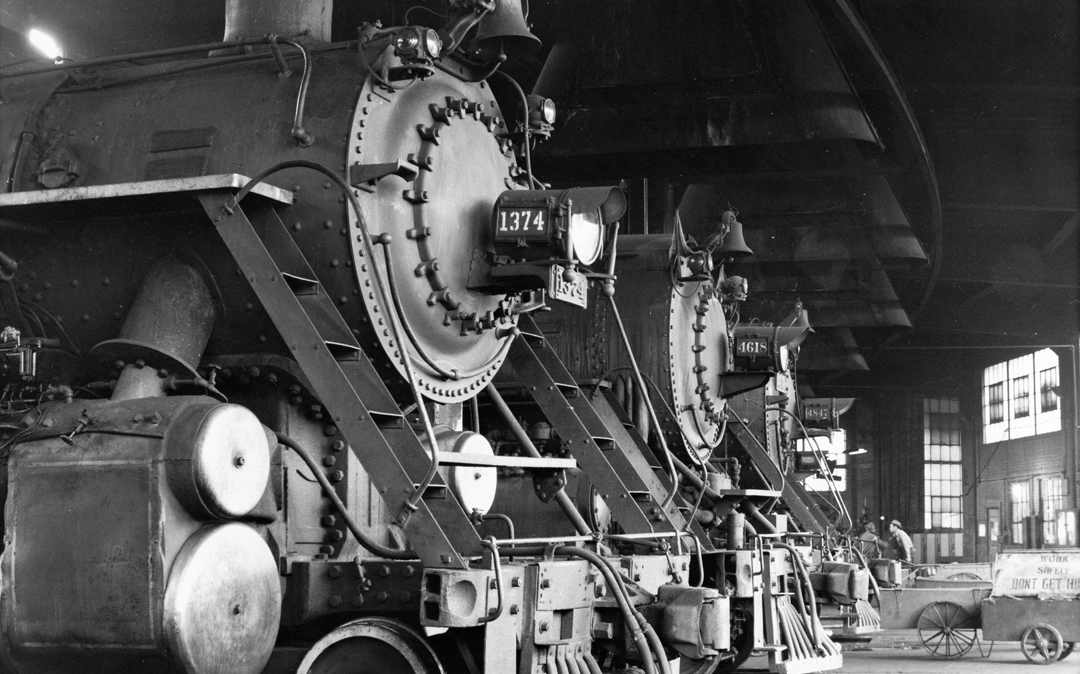
Interior roundhouse view showing the 1374, 4618 and 4847 awaiting service. Note the carts full of tools and workers assessing what needs to be repaired. This scene daily scene, while dating to the 1940s, could be seen daily from the 1920s through the early 1950s. (North Carolina Division of Archives and History)
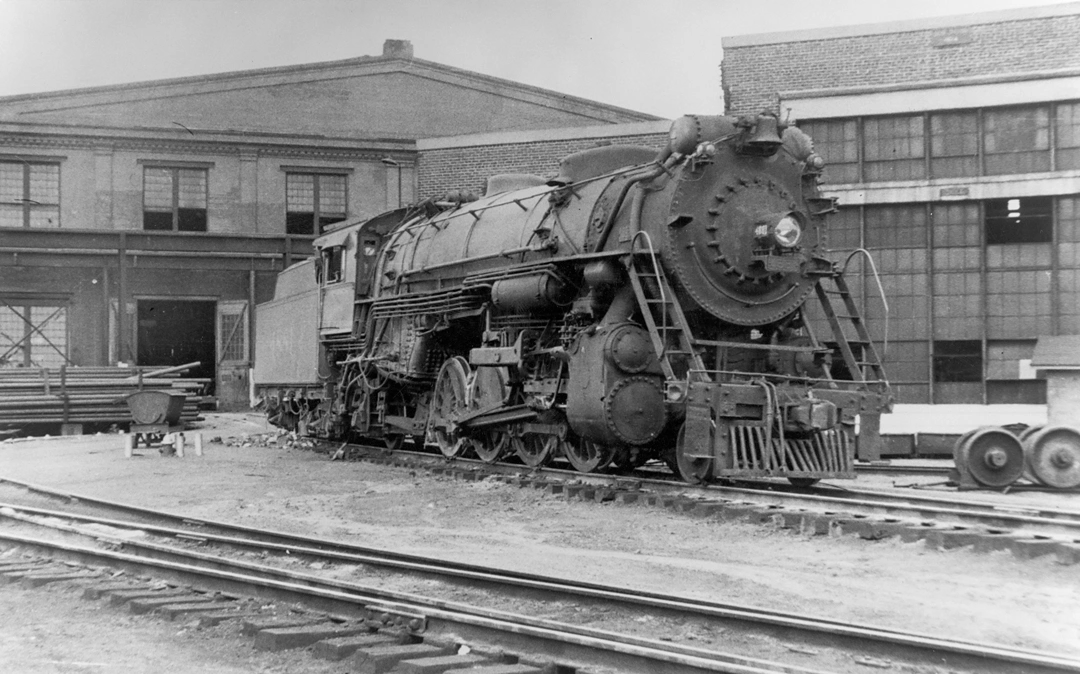
Southern 4881, a Ms-4 class 2-8-2 is awaiting work in the back shop during the 1940s. From this point, the locomotive would be separated from the tender and enter the building facing south. The tracks beside the roundhouse were also used for temporary storage and work on locomotives by roundhouse crews. On average, a locomotive entering the back shop would require two to four weeks for overhaul. The back shop accommodated up to 15 locomotives at one time. (North Carolina Division of Archives and History)
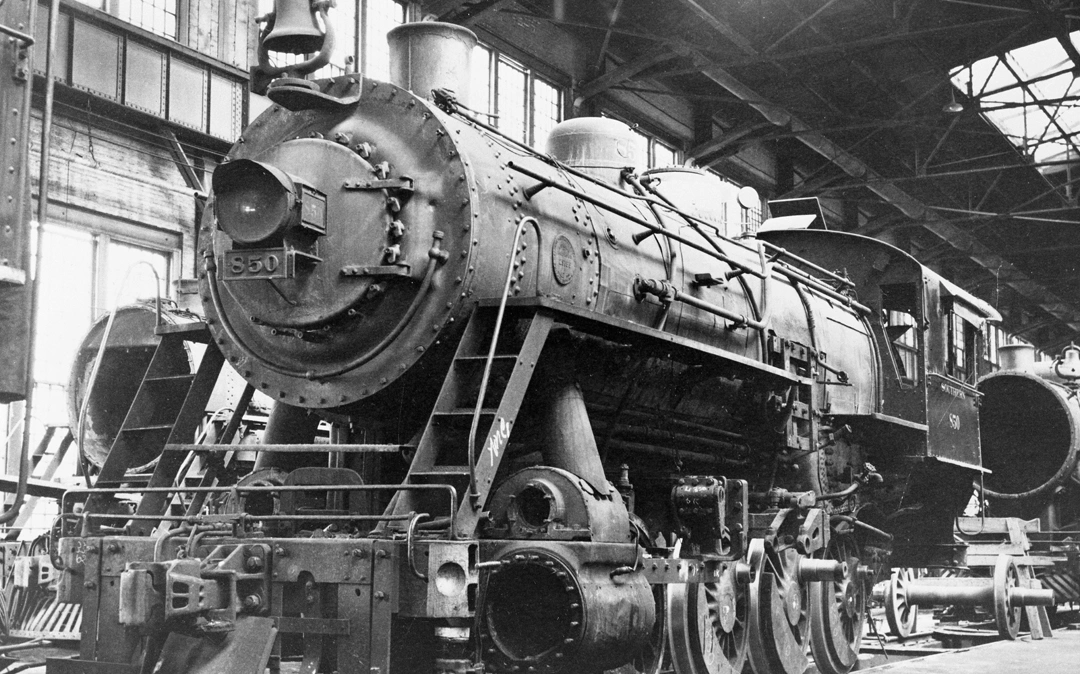
This locomotive, bracketed by two other locomotives, has not experienced total disassembly, since it still has the boiler front and headlight in place. Note that cylinder covers and drive rods have been removed. One easy way to spot a Spencer locomotive was the walkway step handrails and the triangular bell bracket – all were made to the same design. Each railroad shop on the Southern personalized certain parts that gave the locomotives a local identity. (North Carolina State Archives)
A new 37-stall roundhouse was constructed in 1924, complete with a 100-foot turntable. Other work performed enlarged or updated existing buildings throughout the 1940s as technology changed over the years. Diesel locomotives first arrived in 1941 and quickly began to replace steam into the early 1950s. Southern Railway completely converted to diesel locomotives by 1952 but continued to show Spencer Shops was still viable for maintenance and repairs. Unfortunately, the decision was made in 1960 to move all locomotive and car repair to newer facilities in Atlanta, GA and other shops in Tennessee. Only the freight rail yard was used until replaced by the new Spencer Yard in Linwood, five miles north of Spencer, in 1979.
The Southern Railway donated 3.1 acres of the original shop property in 1977 and an additional 50 acres in 1979 to create the North Carolina Transportation Museum.
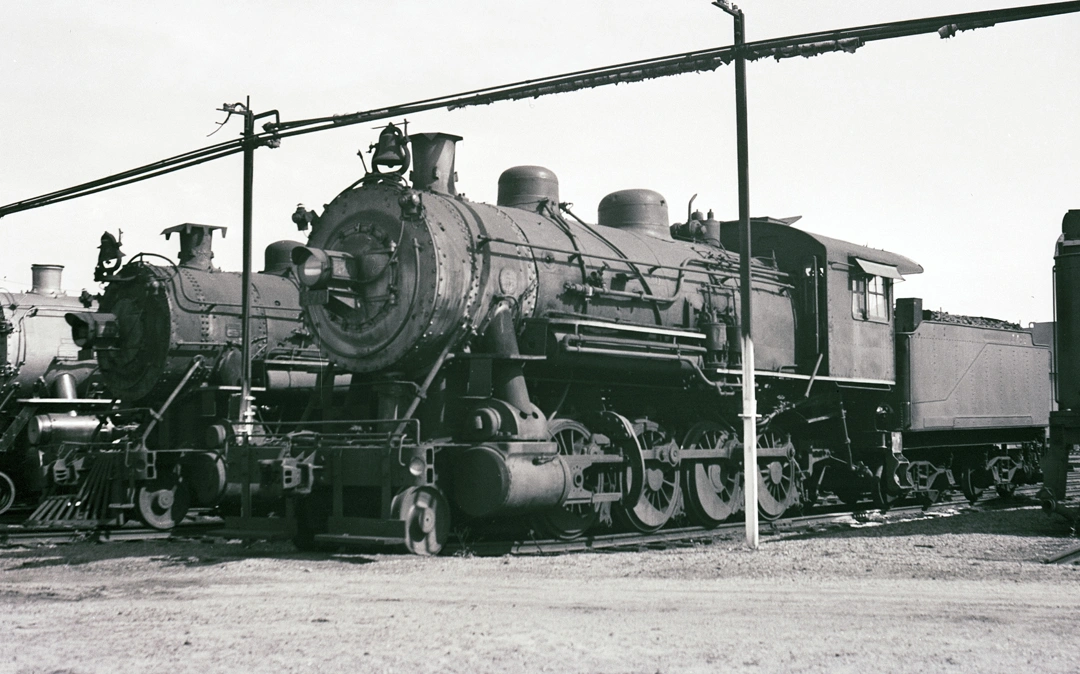
Southern Ks class 2-8-0 870 sits on the outer tracks around the turntable on October 20, 1936 with several others awaiting repair. Note the missing valve gear, allowing easy movement of the locomotive and tender around the property. This locomotive was sold for scrap during March 1952. (Larry Neal Collection)
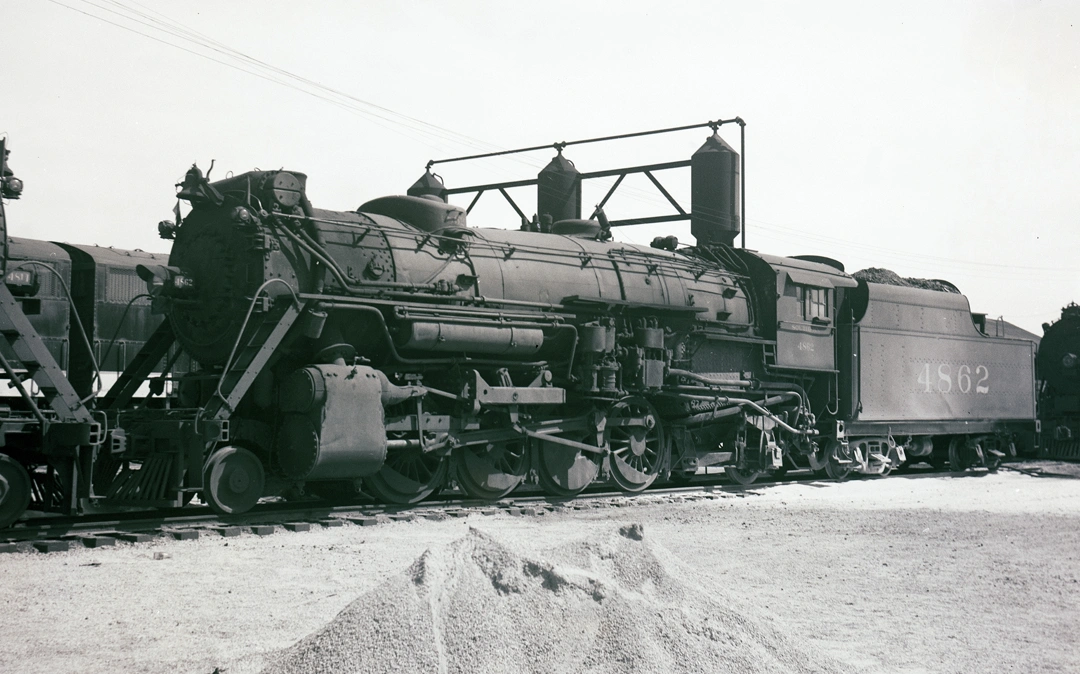
Southern Ms-4 class 2-8-2 4862 and 4811 are sitting at the sand tower tracks on May 29, 1949. Note the F-units behind them, also receiving sand. Locomotives used sand to gain traction between the metal drive wheels and the rail, basically using as grit. The full transition from steam to diesel took place during 1952 on the Southern Railway. (Larry Neal Collection)
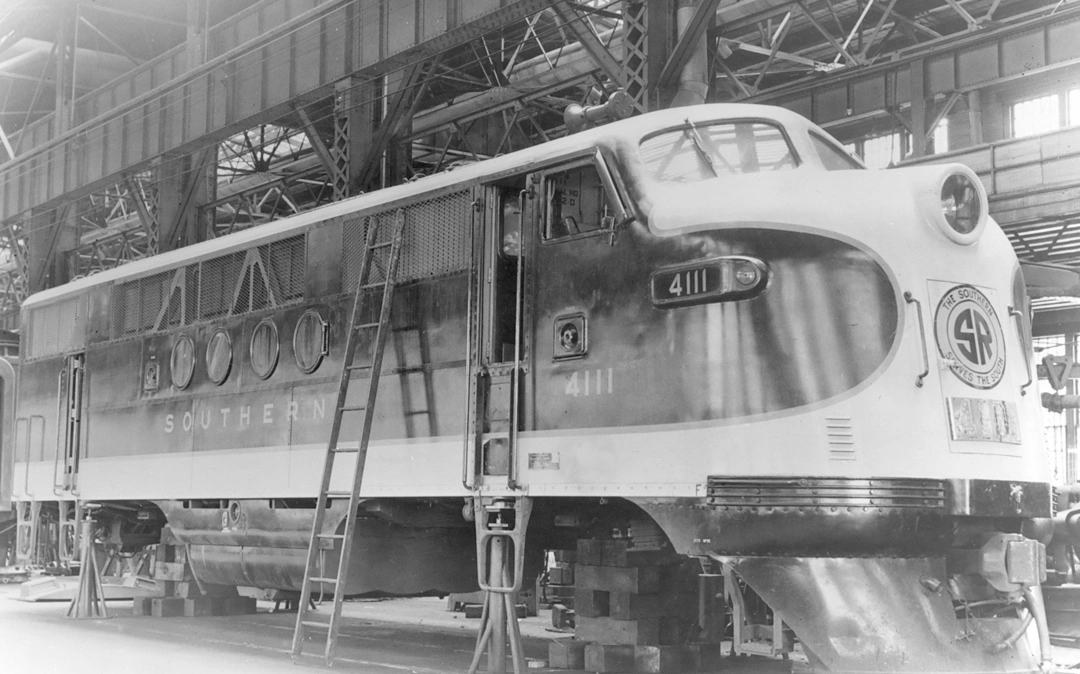
The shop force at Spencer worked hard to convert the back shop and roundhouse for diesel locomotive work between 1947 and 1953. Spencer was modified to perform rebuilds and mechanical upgrades to diesel locomotives. FT 4111, built in 1943, is having its diesel prime mover rebuilt along with traction motor replacement in the trucks. Technically, all diesels are diesel-electric, with an electric generator creating power to turn electric traction motors around the axles. (North Carolina Division of Archives and History)
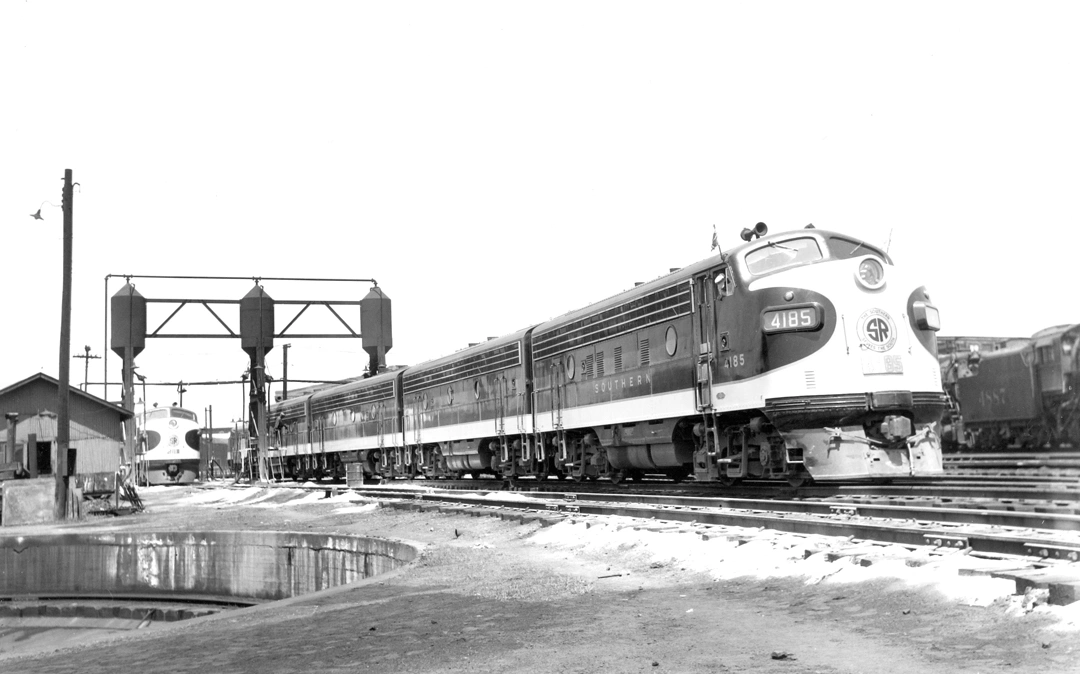
A brand new ABBA four-unit F-3 diesel locomotive set is being refueled at Spencer on May 29, 1949. A brand-new service area was constructed near the oil house for diesels, allowing locomotives to receive diesel fuel and sand in the same area. The second turntable pit was still in use to turn steam locomotives, though it was removed by the early 1950s. (David Driscoll photo, J. Marvin Black collection)
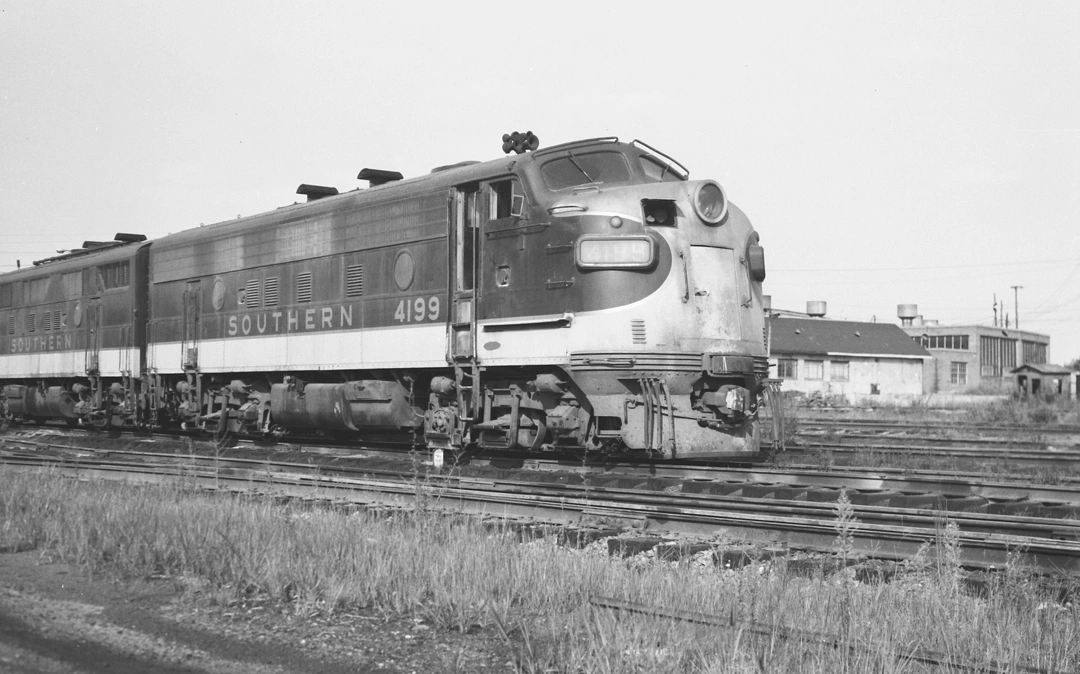
Locomotive 2029 and crew are switching the Dukeville train, taking coal to the Duke Power plant on the Yadkin River. This switch run was the responsibility of Spencer Yard until the opening of Linwood Terminal. This locomotive was retired in 1976 and rebuilt into road slug 937 for hump yard service. (Marvin Rogers collection)
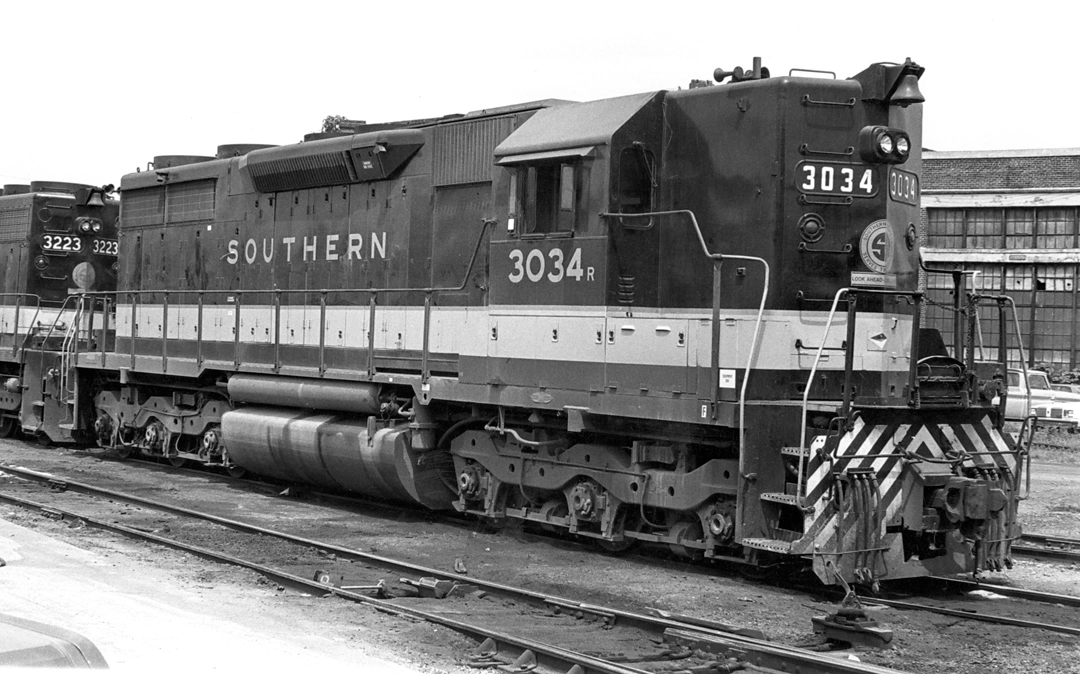
Locomotive 3034 and No. 3223 were both products of EMD, built in 1965 and 1973, respectively. The Southern used six-axle power (similar to these locomotives) for long distance freight trains between Washington, DC and Atlanta. (Marvin Rogers photo)